English
 Latviešu
 Svenska
 Kreyòl Ayisyen
 فارسی
فارسی русский
  עברית
עברית bosanski
 Català
 Español
 Melayu
 Ελληνικά


L'ajout ou le retrait de joints est une méthode de réparation supplémentaire. S'il est utilisé correctement dans le processus d'entretien des tracteurs -accompagnés, des résultats satisfaisants seront obtenus.
Augmentation et diminution du joint dans le moteur diesel
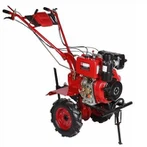
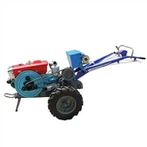
tracteur ambulant
Le réglage du temps d'alimentation en huile du moteur diesel à l'aide de la pompe à huile à piston unique pour la pompe à huile haute-pression est réalisé en ajoutant ou en réduisant des joints. Lorsque la pompe à huile est remplacée par une nouvelle pompe à huile ou l'arbre d'équilibrage inférieur, parfois le tenon des arbres de rotor intérieur et extérieur de la pompe à huile et la petite rainure à l'extrémité de l'arbre d'équilibrage inférieur sont trop serrés (car la profondeur de la rainure de l'arbre ne suffit pas). Arbre d'équilibrage, à ce moment, des joints appropriés peuvent être ajoutés, et l'arbre d'équilibrage suivant est adapté pour tourner librement. Le chapeau de palier principal est remplacé par un nouveau vilebrequin, douille principale ou chapeau de palier principal, etc., parfois le vilebrequin est trop serré. Lorsque le volant est poussé et tiré à la main, il n'y a pas de jeu axial et le coussinet de chapeau de palier principal peut être ajouté. Une cale de 1 mm d'épaisseur peut être ajoutée entre la plaque coulissante et la butée. Parfois, lorsque le joint est trop épais, l'accélérateur ne pourra pas être ajouté et la vitesse requise ne peut pas être atteinte, et le joint doit être coupé de manière appropriée. Le couvre-culasse peut être dû à des erreurs de moulage. Parfois, lorsqu'un nouveau couvre-culasse est remplacé, la tête de l'arbre de décompression appuie sur la soupape d'admission, ce qui fait que le cylindre n'a aucune force de compression. Dans ce cas, il peut être résolu en augmentant le joint de couvre-culasse. Les entretoises sur le châssis augmentent et diminuent
In the actual work of the drive wheel bearing seat, when a new drive shaft or bearing seat is replaced, the drive shaft will be too tight, especially if the tapered roller bearing is replaced, the top pressure will be tighter. Bearing seat gaskets of appropriate thickness should be installed, and the amount of gaskets should be added to push and pull the hub without axial clearance. It is advisable to pinch the steering handle by hand and turn the drive shaft to rotate freely. The shifting positioning springs in the padded gearbox with some springs and sealing rings, the working time is long, the springs become shorter and softer, or a small amount is broken, and the phenomenon of automatic dislocation occurs. In the case that you cannot buy a new spring (in fact, sometimes you don't have to buy a new one), you can add a small pad to the bottom of the fork positioning hole or use a muslin strip to knead it into a small ball and push it in, so that the spring is slightly exposed and positioned. Outside the hole, continued use works well. When purchasing a new auxiliary transmission, first reverse gear or second or third gear shift fork shaft, sometimes the new shaft is shorter or longer, and the positioning groove on the shaft is deviated from the corresponding gear. If it is longer, it can be sawed off or polished with a grinding wheel, but the fork shaft should be placed on the gearbox body for calibration to determine which end to saw. The positioning groove deviates from the corresponding gear, that is, when the positioning steel ball falls into the positioning groove and the gear meshing is incomplete, the force will automatically disengage.